Climate change and food security in India

Climate change and food security in India

Climate change has added to the enormity of India’s food security challenges. While the relationship between climate change and food security is complex, most studies focus on one dimension of food security, i.e., food availability. This paper provides an overview of the impact of climate change on India’s food security, keeping in mind three dimensions — availability, access, and absorption. It finds that ensuring food security in the face of climate change will be a formidable challenge and recommends, among others, the adoption of sustainable agricultural practices, greater emphasis on urban food security and public health, provision of livelihood security, and long-term relief measures in the event of natural disasters.

Indian Agriculture, Food Security, SDGs, Nutrition, Livelihood, Climate Change

Introduction

At the heart of the Sustainable Development Goals (SDGs) are targets to end hunger, achieve food security, and improve nutrition. For India, food security continues to be high on its list of development priorities because the country’s relatively high rates of economic growth have not led to a reduction in hunger and undernutrition. India’s gross domestic product at factor cost and per capita income grew at seven percent and five percent per annum, respectively, from 1990-91 to 2013-14. [i] However, the incidence of undernutrition has dropped only marginally from 210.1 million in 1990 to 194.6 million in 2014, [ii] and India has failed to meet the Millennium Development Goal of halving the proportion of people who suffer from hunger. About 12 Indian states fall under the ‘alarming’ category of the Global Hunger Index. According to the National Family Health Survey 2015-16, the proportion of children under five years who are underweight is significantly high in states such as Bihar (43.9 percent), Madhya Pradesh (42.8 percent) and Andhra Pradesh (31.9 percent). [iii]

While large sections of the Indian population suffer from acute undernutrition, rising incomes and growing urbanisation are rapidly changing the composition of the food basket — away from cereals to high-value agricultural commodities such as fish and meat. [iv], [v] As a result, the total demand for foodgrains is projected to be higher in the future due to an increase in population as well as a growing indirect demand from the feed. Mittal (2008) has made long-term projections of India’s food demand and supply up to 2026. According to her, the increase in total food demand is mainly due to growth in population and per capita income while production is likely to be severely constrained by low yield growth. [vi] Moreover, it will be difficult to meet India’s long-term food requirements with domestic production alone. [vii]Kumar et al (2009) also find that with current production trends, meeting future demand for foodgrains through domestic production will be difficult. [viii]

One of the biggest issues confronting Indian agriculture is low productivity. India’s cereal yields are drastically lower than those of developed regions such as North America (6671 kg per ha), East Asia and the Pacific (5,184 kg per ha), and the Euro area (5855.4 kg per ha) (see Table 1). Table 2 shows that yield per hectare of foodgrains has stagnated in India since the 1980s.

Table 1: Cereal yields (kg per ha, 2013)

Country/ Region Kg per hectare
East Asia & Pacific (developing only) 5,184.0
Central Europe and the Baltics 4,131.1
Sub-Saharan Africa 1,433.5
Europe & Central Asia (all income levels) 3,661.6
Euro area 5,855.4
North America 6,671.0
India 2,961.6
World 3,851.3

Source: World Bank Database

 Table 2: Growth rate of yield per hectare (%) of foodgrains

  Rice Wheat Coarse Cereals Pulses Total Foodgrains
1980-81 to 1990-91 2.7 3.4 2.6 2.0 3.0
1990-91 to 2000-01 0.9 1.7 1.3 -0.6 1.7
2000-01 to 2010-11 1.6 1.0 4.1 2.4 1.7
2010-11 to 2014-15 1.6 -1.0 3.1 1.9 1.8

Source: Reserve Bank of India database  

How does climate change affect food security?

The World Food Summit in 1996 defined food security thus: “Food security exists when all people, at all times, have physical, social and economic access to sufficient, safe and nutritious food which meets their dietary needs and food preferences for an active and healthy life.”[ix] According to this definition, there are three main dimensions to food security: food availability, access to food, and food absorption. Thus, adequate food production alone is not a sufficient condition for a country’s food security.

Food security is one of the leading concerns associated with climate change. [x] Climate change affects food security in complex ways. It impacts crops, livestock, forestry, fisheries and aquaculture, and can cause grave social and economic consequences in the form of reduced incomes, eroded livelihoods, trade disruption and adverse health impacts. However, it is important to note that the net impact of climate change depends not only on the extent of the climatic shock but also on the underlying vulnerabilities. According to the Food and Agriculture Organization (2016), both biophysical and social vulnerabilities determine the net impact of climate change on food security. [xi]

Much of the literature on the impact of climate change on food security, however, has focused on just one dimension of food security, i.e., food production. The impact of climate change on the other dimensions of food security — access and utilisation — have received little scholarly attention. This paper explores the impact of climate change on India’s food security by considering all these dimensions of food security.

Food production

Climate change presents an additional stress on India’s long-term food security challenges as it affects food production in many ways. For one, it may cause significant increases in inter-annual and intra-seasonal variability of monsoon rainfall. According to World Bank estimates, based on the International Energy Agency’s current policy scenario and other energy sector economic models, for a global mean warming of 4°C, there will be a 10-percent increase in annual mean monsoon intensity and a 15-percent increase in year-to-year variability in monsoon precipitation. [xii]  The World Bank (2013) also predicts that droughts will pose an increasing risk in the north-western part of India while southern India will experience an increase in wetness. [xiii]

The impact of climate change on water availability will be particularly severe for India because large parts of the country already suffer from water scarcity, to begin with, and largely depend on groundwater for irrigation. According to Cruz et al. (2007), the decline in precipitation and droughts in India has led to the drying up of wetlands and severe degradation of ecosystems. [xiv] About 54 percent of India faces high to extremely high water stress.[xv] Large parts of north-western India, notably the states of Punjab and Haryana, which account for the bulk of the country’s rice and wheat output, are extremely water-stressed.[xvi] Figure 1 shows that groundwater levels are declining across India. About 54 percent of India’s groundwater wells are decreasing, with 16 percent of them decreasing by more than one meter per year. [xvii] North-western India again stands out as highly vulnerable; of the 550 wells studied in the region, 58 percent had declining groundwater levels. With increased periods of low precipitation and dry spells due to climate change, India’s groundwater resources will become even more important for irrigation, leading to greater pressure on water resources. According to the World Bank projections, with a global mean warming of 2°C above pre-industrial levels, food water requirements in India will exceed green water availability. [xviii] The mismatch between demand and supply of water is likely to have far-reaching implications on foodgrain production and India’s food security.

The impact of climate change on water availability will be particularly severe for India because large parts of the country already suffer from water scarcity, to begin with, and largely depend on groundwater for irrigation.

Figure 1: Groundwater level in India (meters below the ground level)

Climate Change, Food Security, SDGs, India
Source: World Resources Institute

Indian agriculture, and thereby India’s food production, is highly vulnerable to climate change largely because the sector continues to be highly sensitive to monsoon variability. After all, about 65 percent of India’s cropped area is rain-fed. Figure 2 shows that most districts with very high and high vulnerability to climate change are in Rajasthan, Gujarat, Maharashtra, Madhya Pradesh, Karnataka and Uttar Pradesh. Wheat and rice, two crops central to nutrition in India, have been found to be particularly sensitive to climate change. Lobell et al (2012) found that wheat growth in northern India is highly sensitive to temperatures greater than 34°C. [xix] The Intergovernmental Panel on Climate Change (IPCC) report of 2007 echoed similar concerns on wheat yield: a 0.5°C rise in winter temperature is likely to reduce wheat yield by 0.45 tonnes per hectare in India. [xx] Acute water shortage conditions, together with thermal stress, will affect rice productivity even more severely. [xxi]

Figure 2: Vulnerability of Indian agriculture to Climate Change (2021-2050)

Climate Change, Food Security, SDGs, India, agriculture
Source: CA Rama Rao et al (2013)  [xxii]

Food access

While there has been considerable progress in understanding the sensitivities of crop production to yield, there are relatively few models which assess the impact of climate change on access to food. According to the Fourth Assessment Report of the IPCC, depending on the climate change scenario, 200 to 600 million more people globally could suffer from hunger by 2080 (Yohe et al., 2007). [xxiii] Lloyd et al (2011) also make the projection that climate change will have significant effects on future undernutrition, even when the beneficial effects of economic growth are taken into account. [xxiv] According to their model predictions, there will be a 62-percent increase in severe stunting in South Asia and a 55-percent increase in east and south sub-Saharan Africa by 2050. [xxv]

It is more difficult to find similar, modelling-based studies on the impact of climate change on food access and nutrition specifically focusing on India. However, noted experts like Nira Ramachandran have underscored the importance of factoring climate change in the discourse on nutrition in the country. Ramachandran warns that climate change can slow down, and even drastically reduce, the improvements in food security and nutrition that India has managed to achieve so far. [xxvi]

Climate change amplifies the economic drivers of food insecurity. Variation in the length of the crop growing season and higher frequency of extreme events due to climate change and the consequent growth of output adversely affect the farmer’s net income. India is particularly vulnerable because its rural areas are home to small and marginal farmers who rely on rain-fed monocropping, which provides barely a few months of food security in a normal year. [xxvii] According to Ramachandran (2014), food stocks begin to run out three or four months after harvest, farm jobs are unavailable and by the next monsoon/sowing season, food shortages peak to hunger. [xxviii] Climate change will also have an adverse impact on the livelihoods of fishers and forest-dependent people. Landless agricultural labourers wholly dependent on agricultural wages are at the highest risk of losing their access to food. [xxix], [xxx]

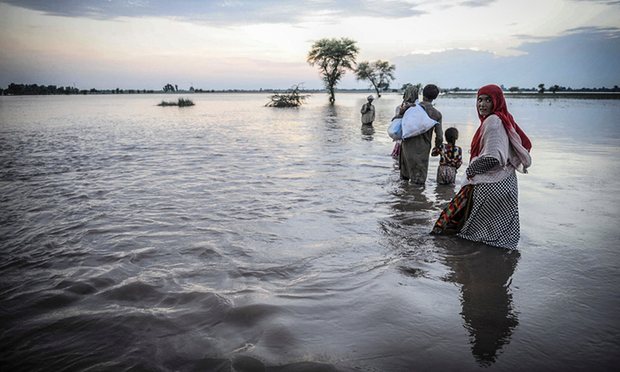
In regions with high food insecurity and inequality, increased frequency of droughts and floods will affect children more, given their vulnerability. Vedeld et al (2014) conducted a survey of nine villages in the drought-prone Jalna district of Maharashtra and found that local crop yields and annual incomes of farmers dropped by about 60 percent in the drought of 2012-13. [xxxi] Such a large fall in income is likely to have a huge impact on child nutrition because poor households typically spend the bulk of their earnings on food. In another study based on 14 flooded and 18 non-flooded villages of Jagatsinghpur district in Orissa, Rodriguez-Llanes et al (2011) found that exposure to floods is associated with long-term malnutrition. [xxxii] According to their study, children exposed to floods during their first year of life presented higher levels of chronic malnutrition. [xxxiii]

In regions with high food insecurity and inequality, increased frequency of droughts and floods will affect children more, given their vulnerability.

Yet the impact of climate change on food access is not limited to rural areas. Urban food insecurity is also a critical issue because poor households from rural and coastal regions typically migrate to urban areas for livelihood options. Ramachandran observes that hunger often triggers off a wave of migration towards cities, relocating entire families to urban slums. [xxxiv] These migrants mostly join the ranks of poorly paid workers in the urban informal sector, where there is no security of tenure and wages fall below the legal minimum. India’s urban food insecurity indicators present an alarming picture. For example, over 30 percent of children below five years are underweight in urban Bihar, Madhya Pradesh and Karnataka (See Table 3). The proportion of urban children who are stunted and wasted is high even in Karnataka and Maharashtra, which are relatively prosperous states.

Table 3: Child nutritional status in urban India (2014-15)

Proportion of children under 5 who are stunted (%) Proportion of children under 5 who are underweight (%) Proportion of children under 5 who are wasted (%)
Andhra Pradesh 28.3 28.4 15.5
Assam 22.3 21.4 13.2
Bihar 39.8 37.5 21.3
Goa 18.3 25.3 27.7
Haryana 33.4 28.5 21
Karnataka 32.6 31.5 24.8
Maharashtra 29.3 30.7 24.9
Manipur 24.1 13.1 6.4
Meghalaya 36.5 22.9 13.7
Madhya Pradesh 37.5 36.5 22
Puducherry 24.7 23.3 26.1
Sikkim 22.9 12 13.2
Telangana 20.9 22.2 14.6
Tamil Nadu 25.5 21.5 19
Tripura 17.2 21.7 13.4
Uttarakhand 32.5 25.6 18.6
West Bengal 28.5 26.2 16.7

Source: Compiled from National Family Health Survey – 4 Database [xxxv]

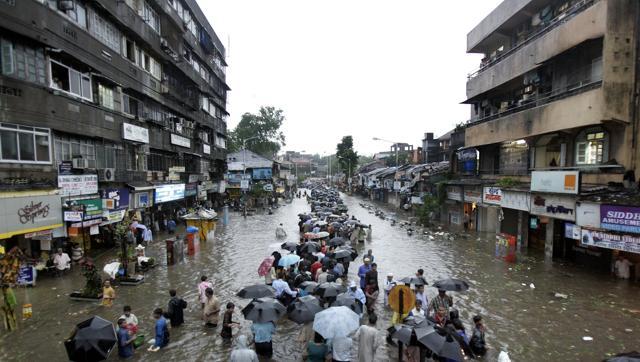
Climate change will exacerbate India’s existing problems of urban food insecurity. The highest risks related to climate change are likely to be concentrated among the low-income groups residing in informal settlements which are often located in areas exposed to floods and landslides and where housing is especially vulnerable to extreme weather events such as wind and water hazards. [xxxvi] Mumbai and Chennai are especially prone to bear the brunt of climate change. [xxxvii] Dasgupta et al (2012) add Kolkata to the list of cities that are particularly vulnerable to climatic risks, [xxxviii] as climate change is likely to intensify the frequent flooding in the Hooghly river during monsoon. [xxxix] The poor inhabitants of Kolkata are most vulnerable as their homes are located in low-lying areas or wetlands that are particularly prone to tidal and storm surges. [xl]

Given that food is the single largest expenditure for poor urban households, displacement, loss of livelihood or damage to productive assets due to any such extreme weather event will have a direct impact on household food security. [xli] The urban poor has also been identified as the group most vulnerable to increases in food prices following production shocks and declines that are projected under future climate change. [xlii]

Food absorption

There are many potential impacts of climate change on food absorption but there is a dearth of quantitative studies on the subject which focus on India. Overall, the global threat is that climate change could lead to a reduction of production and consumption of certain foods that play a critical role in the diets of poor rural and indigenous populations such as fish, fruits and vegetables, and wild foods. [xliii] Change in climatic conditions could lead to a reduction in the nutritional quality of foods (reduced concentration in proteins and minerals like zinc and iron) due to elevated carbon dioxide levels. [xliv] In India, where legumes (pulses) rather than meat are the main source of proteins, such changes in the quality of food crops will accelerate the largely neglected epidemic known as “hidden hunger” or micronutrient deficiency. [xlv] Phalkey et al (2015) argue that micronutrient deficiencies increase the risk of acquiring an infectious disease which in turn worsens the problem of undernutrition, creating a vicious circle. [xlvi] Evidence from Botswana suggest that changes in climate that lead to an increase in temperature and a decrease in precipitation are associated with an increase in diarrhoeal disease in children. [xlvii] In India, children living in poor rural areas and urban slums are at higher risk of morbidity and mortality from diarrhoeal diseases. Projections made by Moors E. et al. (2013) say that climate change will lead to an average increase of about 13.1 percent in diarrhoea in the Ganga basin. [xlviii] Ramachandran (2014) also argues that climate change could lead to a reversal of India’s achievements in reducing diarrhoea-related deaths. [xlix]

The impact of climate change on vector-borne diseases is fairly well documented. Climate change will lead to the emergence of new patterns of pests and diseases which will affect human health and lower the capacity to utilise food effectively, thereby posing new risks for food security. For instance, more people will be exposed to vector-borne diseases such as malaria, dengue and chikungunya. According to Dhara, Schramm and Luber (2013), the entire population of India except those living in areas above 1700 m above sea level are at risk of contracting malaria. [l] The arboviral diseases chikungunya and dengue may also be influenced by climate as both are transmitted by the common vector Aedes aegypti. [li] The urban poor living in informal settlements are particularly vulnerable, absent the basic facilities such as piped water, sanitation, clean drinking water, drainage systems, and heath facilities. High incidence of undernutrition due to poverty exposes the urban poor to diseases linked to climate impacts, which in turn aggravates undernutrition and ill-health and reduces the ability to adapt and build resilience to climate change. [lii] Adverse effects of malaria, diarrhoea and undernutrition have been found to be concentrated among children due to physiological susceptibility. [liii] Children have been found to be at greater risk when food supplies are restricted. [liv]

Way forward: Recommendations

  • Adoption of sustainable agricultural practices

The main problem of Indian agriculture is low productivity. To meet India’s growing food demand, there is an acute need for increasing productivity in all segments of agriculture. But given the vulnerability of Indian agriculture to climate change, farm practices need to be reoriented to provide better climate resilience. India needs to step up public investment in development and dissemination of crop varieties which are more tolerant of temperature and precipitation fluctuations and are more water- and nutrient-efficient. Agricultural policy should focus on improving crop productivity and developing safety nets to cope with the risks of climate change.

Better management of water resources must be a key feature of sustainable agriculture. Water supply management options such as new storages and water harvesting are important, especially in the water-stressed regions of north-western India. Water use efficiency in agriculture needs to be enhanced. India’s irrigation infrastructure needs to be upgraded; particular attention needs to be given to north-western India, the country’s food basket that is prone to climate-induced droughts. Despite the benefits of drip irrigation, it is still largely adopted for high-value horticultural crops. To enhance the area under micro and drip irrigation, the government should redirect the subsidy on electricity for drawing water for irrigation purposes, which has been a major contributor to declining groundwater levels, towards the adoption of drip irrigation techniques.

A four-pronged strategy is recommended for the water sector:

  • Increase irrigation efficiency
  • Promote micro irrigation in water-deficient areas
  • Better water resource infrastructure planning
  • Restoration of water bodies in rural areas
  • Stronger emphasis on public health

India has historically had a poor record in public health. With the worsening challenges of climate change, the country’s policymakers have also paid little attention to its impacts on health. Despite the fact that the disease burden from vector-borne and diarrhoeal diseases is very high in urban slums and tribal areas of India, this area was overlooked when the original National Action Plan for Climate Change (NAPCC) was formulated. The Ministry of Health is currently formulating a National Mission for Health under the ambit of NAPCC but given the close relationship between climate change, infectious diseases and food absorption, public expenditure on health needs to be stepped up drastically. 

  • Enhance livelihood security

Achieving food security in the context of climate change calls for an improvement in the livelihoods of the poor and food-insecure to not only help them escape poverty and hunger but also withstand, recover from, and adapt to the climate risks they are exposed to. India’s National Rural Employment Guarantee Act (NREGA) of 2005 marked a global milestone in the history of poverty alleviation. NREGA has had several positive effects: increasing rural wages, reducing gender wage gaps, enabling better access to food, and reducing distress migration from rural areas. NREGA has also made an important contribution to child well-being, through the reduction of hunger and improvement of health and education. [lv] Moreover, the scheme contributes to ecological restoration and natural resource regeneration in dry regions. Water conservation accounted for about half of the total projects supported by NREGA from 2006 to 2008, with 850,000 completed works. [lvi] Although some gaps have been observed in the implementation of NREGA, the scheme has various benefits for the rural poor, particularly the marginalised sections, women, scheduled castes and scheduled tribes. Therefore, funding allocations for NREGA should be maintained and efforts should be made to more effectively streamline the funds to plug existing leakages.

Given the level of urban poverty, undernutrition, and lack of remunerative employment, there is a strong case for providing guaranteed employment on the lines of NREGA in urban areas as well. Such a scheme should be tailored to not only provide livelihood security to the urban poor but also create climate-resilient urban infrastructure in Indian cities. Additional efforts are required for the vulnerable populations residing in the ecologically fragile coastal and forest regions.

  • Greater emphasis on urban food insecurity

Urban India is not only an important contributor to global greenhouse gas emissions but also a victim of climate change as poor people account for the bulk of its population. As observed earlier, climate change will have an enormous impact on urban food insecurity. Therefore, urban food insecurity deserves serious attention. The approach towards tackling urban food insecurity must take into account both the access and absorption dimensions of food insecurity. To improve access to healthy food, effective public distribution systems need to be put in place. Efforts must be made to learn from states such as Tamil Nadu which has an effective public distribution system and has better nutritional outcomes. [lvii] To improve food absorption, living conditions in urban informal settlements need to be upgraded. The Swachh Bharat Mission, which aims to construct 10.4 million individual toilets and 0.5 million public toilets and adopt scientific solid waste management in 4,041 towns, may be regarded as a step in the right direction.

Indian cities have an extremely poor record in disaster management. Therefore, public investment in climate-resilient infrastructure should be enhanced. In India, flood control efforts, sanitation infrastructure and surveillance activities are not very effective. Better infrastructure in urban areas will minimise the disease risks caused by flooding.

  • Long-term relief measures in the event of natural disasters

India’s disaster-management strategies are mostly inadequate, short-lived and poorly conceived. Also, much of the emphasis is laid on providing quick relief to the affected households as opposed to developing long-term adaptation strategies. Little effort is made towards addressing the long-term impacts of natural disasters on agricultural productivity and undernutrition. A recent report by NITI Aayog suggests that “the government should transfer a minimum specified sum of cash to affected farmers and landless workers as an instant relief”. [lviii] For richer farmers who may want insurance above this relief, the report recommends a separate commercially viable crop insurance programme. [lix]

Given the vulnerability of Indian agriculture to climate-induced natural disasters and their long-term impacts on agricultural output, livelihoods and nutrition, such a short-sighted approach towards disaster relief will only prove inadequate. The government needs to take a long-term view of disaster relief. Moreover, given the adverse impacts of natural disasters on child nutrition, long-term undernutrition prevention programmes must be implemented in disaster-affected regions. Additional efforts must be directed towards reducing the risk in agriculture. Such schemes should be specially targeted towards small farmers.

  • Need for more impact assessment studies

To develop climate-resilient strategies and make adequate policy interventions, there is a need for an integrated assessment of the impact of climate change on India’s food security. So far, there are fewer studies on the impact of climate change on other dimensions of food security besides production. Research efforts should be directed towards assessing and quantifying where possible the impact of climate change on undernutrition and food absorption.

This paper has been prepared under a project on ‘Urbanising India’, funded by the Research Council of Norway and jointly undertaken by the Observer Research Foundation, Delhi and the Peace Research Institute, Oslo.

http://www.orfonline.org/research/climate-change-and-food-security-in-india/

Indian farmers fight against climate change using trees as a weapon

As the world passes a critical barrier for climate change, radical techniques for turning farms into carbon sinks are growing in popularity in India

In 19 years, Ramu Gaviti’s six acres of land have gone from barren, dry and sparsely vegetated to fertile, moist and thick with biomass. Peacocks, wild pigs and rabbits have reappeared and in rejuvenated rivers, boys trap fish in baskets.

Gaviti once scratched $29 (£23) worth of millet and grass per acre per year. In bad years he left his smallholding in Jawhar, in the hills to the north-east of Mumbai, and went to mine sand at the coast for construction. “Sometimes you feel as if you can go in the river and drown,” said the farmer, who has heard of 50 men who never returned. Now he has more than 1,000 fruit, nut and forest trees, paddy rice, a tractor, a brick house, and an income the equivalent of $1,200 (£975) a Year.

Gaviti’s life has been transformed by a model of agroforestry pioneered by an Indian NGO. “If the organisation had not come, we would have had no guiding person,” he says. The NGO BAIF, who specialise in supporting climate-resilient agriculture, arrived in 1997 and worked closely with local people until 2004. “It was a wasteland virtually,” says agriculturalist Sudhir Wagle, who led the effort. “We began by suggesting 40-60 mango and cashew trees per acre and a boundary of indigenous trees. Including costs such as development of common water sources, we calculate that each acre cost us $130 [£105] a year to improve and that it took us and the farmers five years. But we saw families getting $225 [£180] per acre a year after five years and $670 [£545] per acre a year after ten.”

Gaviti and his fellow farmers are more than an economic success, however. They are a climate success too. Agriculture is the world’s second largest emitter of gases such as CO2 that cause climate change. But the villagers’ trees have been drawing carbon from the atmosphere for years. This represents one of the greatest hopes for India, which has committed to capture 2.5 to 3bn tonnes of carbon through new tree and forest cover by 2030, to deliver on the Paris accord.

“The vast majority of India is agricultural land,” says World Agroforestry Centre’s Dr Ravi Prabhu. “We can deliver from this landscape and help people at the same time. Agriculture finds no mention in the accord. The focus is forests. But agriculture accounts for 10-12% of emissions and 70% of biodiversity loss and fresh water use. We cannot afford to segregate or we will be left with islands of biodiversity surrounded by deserts.”

Turning agriculture into a carbon sink is not a dream. Scientists from the World Agroforestry Centre, Royal Botanic Garden Edinburgh, and elsewhere found that agricultural land can hold four times as much carbon as previously estimated by the Intergovernmental Panel on Climate Change. The US Environmental Protection Agency states that, while fossil fuel use is the primary source of CO2: “The way in which people use land is also an important source, especially when it involves deforestation.” Likewise, land can remove CO2 from the atmosphere through reforestation and improvement of soils.

Scaling up what Gaviti and the other villagers are doing could be one of India’s greatest hopes for delivering on its commitments to the Paris agreement on climate change.

India’s government recognised the value of trees on farms in 2014 with the world’s first national agroforestry policy (pdf), which aims to help increase forest or tree cover to 33% from the present 21%. A key impetus was timber; farm trees meet 65% of India’s demand. The policy could put India leagues ahead on climate change and save land from ruination: 50% of India’s land is degraded and 86% of the degraded land is agricultural, says World Resources Institute’s Dr Nitin Pandit.

Rakesh Sinha, joint secretary in the Ministry of Agriculture, is in charge of rolling out the plan. “Trees have always been part and parcel of Indian agriculture but now we are considering paying farmers for ecological services from agroforestry.”

Back in Jawhar, Gaviti tends his trees, among the many fruits of which have also been a change in social status. “When I go to town, they don’t disrespect me for being a labourer“. Bowing his head and putting his hands together, he says: “They now say Namaskar.”

Cathy Watson is chief of programme development at the World Agroforestry Centre.

Link : https://www.theguardian.com/global-development-professionals-network/2016/oct/29/indian-farmers-fight-against-climate-change-using-trees-as-a-weapon?CMP=share_btn_fb


உலகை அச்சுறுத்தும் தண்ணீர் பற்றாக்குறை

பூமியின் 70 சதவிகித நிலப்பரப்பு தண்ணீரால் சூழப்பட்டிருப்பதால் நாம் அனைவரும் பூமியில் நீர்வளம் எக்காலத்திலும் குன்றாமல் தேவைக்கு அதிகமாக காணப்படும் என எண்ணுகின்றோம். ஆனால் உண்மையில் உலகில் உள்ள நீரில் 97.5 சதவீதம் நீர் கடல் நீர். அதாவது உப்பு நீர். உலக நாடுகளின் தனிமனித தண்ணீர் நுகர்வு ஆண்டிற்கு 1700 கன லிட்டருக்கும் குறைவாக அமைந்தால் அது தண்ணீர் பற்றாக்குறை என வரையறுக்கப்படுகின்றது (IPCC, 2007).

நமது குடிநீர் மற்றும் அன்றாடத் தேவைகளுக்கும், விவசாயத்திற்கும் உபயோகப்படும் நீர் நம்பமுடியாத அளவிற்கு மிகவும் குறைவாக புவியின் மொத்த நீரின் 2.5 சதவிகிதம் மட்டுமே பயன்படுத்த கூடிய நிலையில் உள்ளது. மேலும் மேற்கண்ட 2.5 சதவீத நீரில் 70 சதவிகிதமான நீர் பனிப்பாறைகளாக உறைந்து காணப்படுவதால் உலகின் 2.7 பில்லியன் மக்கள் வருடத்தின் ஒரு மாதமாவது தண்ணீர் தட்டுப்பாட்டிற்கு உள்ளாகின்றனர் (IPCC, 2007).

உலக பொருளாதார மன்றம் ஜனவரி 2015-ம் ஆண்டில் வெளியிட்ட அறிக்கையில் சமூகத்தில் மிகப்பெரிய எதிர்மறை விளைவுகளை ஏற்படுத்தும் உலகின் முதன்மையான ஆபத்தாக தண்ணீர் தட்டுப்பாட்டால் ஏற்படும் நெருக்கடி விளங்கும் என அறிவித்துள்ளது (World Economic Forum, 2015 – Global Risks 2015 Report).

உலக நாடுகளின் தற்பொழுதைய தண்ணீர் நுகர்வு விகிதத்தை கணக்கிடும் பொழுது 2025ம் ஆண்டிற்குள் மொத்த மக்கள் தொகையில் 3ல் 2 பங்கு மக்கள் தண்ணீர் தட்டுப்பாடு பிரச்சினையை சந்திப்பார்கள் என அறியலாம். உலகின் ஒட்டுமொத்த உபயோகிக்கத் தகுந்த 2.5 சதவீத நீர்வளத்தில் 70 சதவிகிதம் விவசாயத்திற்கு பயன்படுத்தப்படுகின்றது. ஆனால் அவற்றுள் 60 சதவிகிதம் நீர், நீர்ப்பாசன அமைப்புகளில் காணப்படும் குறைபாடுகளான கசிவுகள், திறமையற்ற நீர் மேலாண்மை முறைகள் மற்றும் அதிகபடியான நிலத்தடி நீரை உறிஞ்சுகின்ற தாவரவகையை பயிரிடுவதனாலும் வீணாகின்றது. அதிக அளவில் உணவு உற்ப்பத்தி செய்யும் நாடுகளான இந்தியா, சீனா, ஆஸ்திரேலியா, ஸ்பெயின் மற்றும் அமெரிக்கா ஆகியவை தங்களது நீர்வள  ஆதாரங்களின் பயன் அளிக்கும் உச்சவரம்பை நெருங்கிவிட்டது.

பின்லாந்து மற்றும் நெதர்லாந்து ஆராய்ச்சியாளர்கள் மக்கள் தொகை பெருக்கம், பருவ நிலை மாற்றம் மற்றும் நீர் ஆதாரங்களின் இருப்பு ஆகியவற்றை ஆய்வு செய்து கடந்த 2000 ஆண்டுகளில் தண்ணீர் பற்றாக்குறை அதிகரித்து வருவதற்கு பருவ நிலை மாற்றத்தைவிட நான்கு மடங்கு அதிகமான மக்கள் தொகை பெருக்கமே முக்கிய காரணமாக விளங்குவதாக கூறுகின்றனர். உலக நாடுகளில் 1800-ம் நூற்றாண்டுகளில் மிதமான தண்ணீர் பற்றாக்குறை உணரப்பட்டது. ஆனால் 1900-ம் நூற்றாண்டுகளில் உலகின் 2 சதவீதம் மக்கள் தொகை கடுமையான தண்ணீர் பற்றாக்குறைக்கு  உள்ளான பொழுது இப்பிரச்சனை முக்கியத்துவம் பெற ஆரம்பித்தது. மேலும் தண்ணீர் பற்றாக்குறை 1960 ஆம் ஆண்டிலிருந்துதான் மிகவும் வேகமாக அதிகரித்துள்ளது. இக்காலகட்டத்தில் உலக மக்கள் தொகையில் ஆண்றொன்றுக்கு 500 – 1000 கனலிட்டர் தண்ணீருக்கும் குறைவாக பயன்படுத்தும்  மக்களின் விகிதாச்சாரம் 9 சதவிகிதத்திலிருந்து (287 மில்லியன்) 35 சதவிகிதமாக (2,296 மில்லியன்) 2005 ல் உயர்ந்தது.

புவியின் பெரிய நிலப்பரப்பு மற்றும் அதிக மக்கள் தொகை கொண்ட பிராந்தியங்களில் தண்ணீர் தட்டுப்பாடு ஏற்படும் வேகம் மற்ற பிராந்தியங்களை விட அதிகமாக காணப்படுகின்றது. கிழக்கு ஆசியா மற்றும் தெற்கு ஆப்ரிக்கா நாடுகளில் மொத்த மக்கள் தொகையில் 20 சதவிகிதம் பேர் தண்ணீர் பற்றாக்குறையின் ஏதாவது ஒரு நிலையில் 1900-களிலிருந்து வாழ்கின்றனர். இத்தகைய நிலை மத்திய கிழக்கு பகுதியில் 1960 ஆம் ஆண்டு வரை ஏற்படவில்லை. மேலும் தெற்கு ஆசிய பகுதிகளில் தண்ணீர் தட்டுப்பாடு இக்காலகட்டத்திற்கு சற்று தாமதமாக ஏற்ப்பட்டது. ஆனால் தற்பொழுது தெற்கு ஆசியப்பகுதிகளில் தண்ணீர் பற்றாக்குறை நிலவும் போக்கு மிகவும் வேகமாக அதிகரித்துள்ளது. தற்பொழுது தெற்காசிய பகுதிகளில் மொத்த மக்கள் தொகையில் 90 சதவிகிதம் பேர் தண்ணீர் பற்றாக்குறையின் ஏதாவது ஒரு நிலையில் பாதிக்கப்படுகிறார்கள்.


இன்றைய சூழலில் நீர் தட்டுப்பாடு மிகவும் அதிகரித்துள்ளதால் மக்கள் பல்வேறு விதமான தகவமைப்பு நுட்பங்களான நீர்த்தேக்கங்கள் நிர்மாணித்தல், நிலத்தடி நீர் பாசனம் முதலியவற்றை பயன்படுத்துகின்றனர். ஆனால் பல்வேறு பகுதிகளில் போதுமான நீர் ஆதாரம் இல்லாததால் இத்தகைய தகவமைப்பு நுட்பங்கள் கூட தண்ணீர் தேவையை பூர்த்தி செய்ய போதுமானதாக இருப்பதில்லை. அதன் விளைவாக கட்டமைப்பு சாராத பிற நடவடிக்கைகளின் தேவை அதிகரித்துள்ளது. அவற்றுள் நீரின் பயன்பாடு திறன் அதிகரிப்பதில் கவனம்  செலுத்துதல், நீர் பயன்பாட்டின் அளவுகளை குறைத்தல், நாட்டின் அல்லது பிராந்தியத்தின் பொருளாதார கட்டமைப்பில் சீர்திருத்தங்கள் ஏற்படுத்துதல், நீர் பற்றாக்குறை இல்லாத பிராந்தியத்தின் நீர் நிலைகளை நீர் பற்றாக்குறை உள்ள பிராந்தியத்தோடு ஒருங்கிணைத்தல் ஆகியவற்றை கருத்தில் கொள்ளுதல் இன்றியமையாததாகும்.


By Dr. T. Anitha


Reference :

www.climate.org/topics/water.html

https://waterHYPERLINK “https://water.org/water-crisis/water-facts/water/”.HYPERLINK “https://water.org/water-crisis/water-facts/water/”org/water-crisis/water-facts/water/

www.ifad.org/pub/map/pm_v.pdf

https://wwf.panda.org/what_we_do/footprint/agriculture/…/HYPERLINK “https://wwf.panda.org/what_we_do/footprint/agriculture/…/water_use/”waterHYPERLINK “https://wwf.panda.org/what_we_do/footprint/agriculture/…/water_use/”_HYPERLINK “https://wwf.panda.org/what_we_do/footprint/agriculture/…/water_use/”useHYPERLINK “https://wwf.panda.org/what_we_do/footprint/agriculture/…/water_use/”/

https://environmentalresearchweb.org/cws/article/news/43685

https://HYPERLINK “https://stacks.iop.org/ERL/5/034006/mmedia”stacks.iop.org/ERL/5/034006/mmedia

https://prezi.com/ecy7_m2tcarr/HYPERLINK “https://prezi.com/ecy7_m2tcarr/water-scarcity”waterHYPERLINK “https://prezi.com/ecy7_m2tcarr/water-scarcity”-HYPERLINK “https://prezi.com/ecy7_m2tcarr/water-scarcity”scarcity

www.arlingtoninstitute.org/wbp/global-HYPERLINK “http://www.arlingtoninstitute.org/wbp/global-water-crisis/606″waterHYPERLINK “http://www.arlingtoninstitute.org/wbp/global-water-crisis/606”-HYPERLINK “http://www.arlingtoninstitute.org/wbp/global-water-crisis/606″crisisHYPERLINK “http://www.arlingtoninstitute.org/wbp/global-water-crisis/606″/606

Fine particulates causing chronic illnesses

Fine particulates causing chronic illnesses

Low- and middle-income countries disproportionately experience the burden of lung cancer and other deadly diseases

The impact of fine particulate matter (PM2.5) highlighted by the World Health Organisation (WHO) study is felt through a broad spectrum of acute and chronic illnesses that cause premature death.

These include lung cancer, chronic obstructive pulmonary disease (COPD) and cardiovascular diseases. Worldwide, it is estimated to cause about 16 per cent of lung cancer deaths, 11 per cent of COPD deaths, and more than 20 per cent of ischaemic heart disease and stroke. Particulate matter pollution is an environmental health problem that affects people worldwide, but low- and middle-income countries disproportionately experience the burden.

A WHO South East Asian Region (SEAR) statement said, “Air pollution is the world’s biggest environmental risk to health and must be addressed on a priority basis as it continues to rise, causing long lasting disease and illness.”

The study findings, based on data derived from satellite measurements, air transport models and ground station monitors for more than 3000 locations, both rural and urban, were developed by WHO in collaboration with the University of Bath in UK.

Urban nightmare

In instances where accurate PM2.5 (that is, 2.5 micrometers or less) measurements were unavailable, the researchers derived their averages based on PM10, which are larger dust particle-concentrations. It notes that more than 80 per cent of people living in urban areas that monitor air pollution are exposed to air quality levels that exceed the World Health Organization (WHO) limits. The study gave the WHO air quality guidelines for PM2.5 as 10 micrograms per cubic metre annual average, and 25 micrograms per cubic metre 24-hour average.

While all regions of the world are affected, populations in low-income cities are the most impacted. Overall, 98 per cent of cities in low- and middle income countries with more than 100,000 inhabitants do not meet WHO air quality guidelines. However, in high-income countries, that percentage decreases to 56 per cent.

Earlier this year too, the WHO had warned that nearly 1.4 million Indians may have succumbed to diseases caused by indoor air pollution. The numbers released on Tuesday were specific to outdoor air pollution.

Of all of pollutants, fine particulate matter has the greatest impact on health. A lot of the fine particulate matter comes from fuel combustion, both from mobile sources such as vehicles and from stationary sources such as power plants, industry, households or biomass burning.

Link : http://www.thehindu.com/todays-paper/tp-national/fine-particulates-causing-chronic-illnesses/article9155733.ece?css=print


மகிழ்ச்சியான செய்தி. உலக அளவில் பசுமை வன காடுகள் குறைந்தாலும் இந்தியாவில் கூடி உள்ளது.

உலக வங்கி அறிக்கையின் படி கடந்த 25 வருடங்களில் இந்தியாவின் வனப்பகுதி கூடி உள்ளது. எனவே சுற்றுச்சூழலை பாதுகாக்க இந்தியா உரிய நடவடிக்கையை எடுத்து வருகிறது என்பது நிரூபணம் ஆகும். நாடு வாரியாக வனப்பகுதியின் விஸ்தீரணம் 1990 மற்றும் 2015-ம் வருடங்களில் உள்ள அளவு கீழே உள்ள இணைப்பில் உள்ளது.

http://data.worldbank.org/indicator/AG.LND.FRST.K2

45% of India’s coastline facing erosion

45% of India’s coastline facing erosion

The Andaman and Nicobar Islands face the most erosion, with close to 89% of the shoreline eaten away by the Bay of Bengal

Manupriya | IndiaSpend August 12, 2015

im

A seawall set up near Pondicherry to stop shoreline erosion.

As much as 45% of India’s 8,414-km long is facing erosion, according to a new study based on satellite data over 15 years, published in the Indian Academy of Science’s journal Current Science.

The study–the most detailed thus far–also reports that close to 19% of the coastline is stable and about 36% is showing accretion, or expansion. The has lost a net area of about 73 sq km.

Scientists from Space Application Centre (SAC), Ahmedabad and Central Water Commission, Ministry of Water Resources, compared satellite images from two time periods–1989-91 and 2004-06–to measure the changes to India’s coastline.

The face the most erosion, with close to 89% of the shoreline eaten away by the Bay of Bengal.

At the other end of the spectrum is Tamil Nadu, which has gained the most new shoreline, with 62% of its coast gaining land.

Goa has the highest percentage (52%) of stable shoreline.

Like any other maritime country, India’s long peninsular region constantly battles erosion. Developmental activities are often carried out without properly understanding the coastal dynamics, leading to long-term damage, particularly to local communities.

Maritime States and Union territories Erosion length (km) Accretion length (km) Stable length (km) Total length (km) Area under accretion (sq km) Area under erosion (sq km) Net gain/loss (sq km)
Gujarat, Daman and Diu 486.4 298 697.7 1482.1 43.5 27.3 16.2
Maharashtra 449.5 244.5 48.3 742.3 5.1 7.8 -2.8
Goa 27 47 81.4 155.4 1.5 0.8 0.8
Karnataka 106.1 118.7 73.3 298.1 6.3 5.2 1.1
Kerala 218 294 73.6 585.6 9.5 5.3 4.2
Tamil Nadu and Puducherry 281.6 514.1 29.3 824.9 42.6 17.2 25.5
Andhra Pradesh 443.9 186.9 340.5 971.3 25.1 46.9 -21.8
Odisha 199 205 32.1 436.1 13.3 13.8 -0.5
West Bengal 115.1 19.5 147.7 282.2 1.5 11.6 -10.1
Lakshadweep Islands 72 63.2 1 136.3 0.8 1.7 -0.9
Andaman Islands 740.4 944.8 36.8 1722 27.1 17.9 9.2
Nicobar Islands 690.1 68.3 19.2 777.6 0.8 94.7 -94
Total 3829.1 3004 1580.8 8413.9 177.2 250.2 -73.1

Source: A S Rajawat et al

Nature maintains a balance, human activities disrupt it

Why do some regions show more erosion than others? The reasons are both anthropogenic and geographical; in other words, human activities and natural phenomena.

Shaped by wind and waves, the coast line is either convex or concave and this shape has a major bearing on coastal erosion, said Tad Murty, an oceanographer at the University of Ottawa in Canada. Murty is not connected with the Current Science study.

If the energy of incoming waves converges on a coastline, it will erode. It the waves diverge, there is little erosion. Wave energy is the main cause of coastal erosion.”

Geographical processes maintain a steady balance of erosion and accretion. Human activities and natural disasters like tsunami, hamper the natural rhythm and precipitate erosion.

In the case of the Nicobar Islands, a probable reason for severe erosion could be the December 2004 tsunami, note the researchers. Construction of dams in catchment areas of rivers and ports, fishing harbors and jetties have sparked erosion in other areas.

An example is Palletummalapalem, Andhra Pradesh, where the coast was significantly eroded because of a reduced flow of sediment from river estuaries. “The supply was reduced because of dam construction in the catchment area of rivers,” said A S Rajawat, a co-author of the study and scientist with the SAC, Ahmedabad.

An old port created the vast Marina beach, but there’s a price

Ramesh Ramachandran, one of India’s leading coastal experts and the director of the Centre for Sustainable Coastal Management, Chennai, said that the results of the new study mirror their findings on erosion along India’s coastline.

He also said that “not much should be read” into the fact the Tamil Nadu coastline is witnessing the maximum accretion. Only about 25-odd km have gained in terms of beach areas; many regions are suffering erosion.

Ramachandran cites the example of Chennai’s main beach, Marina, which is located at the southern end of a the century-old Chennai port. The port has caused an accumulation of sand, making one of the world’s largest. But, this excessive accumulation on the southern side has resulted in erosion on the northern side.

Coastal erosion needs to be tackled in a “holistic manner”, said Ramachandran. He is now working with the Ministry of Environment and Forests on an Integrated Coastal Zone Management Program, which cohesively considers several coastal problems, such as erosion, pollution, tourism and sediment discharge from rivers.

Ramachandran and the ministry have run successful pilots in parts of Gujarat, Orissa and West Bengal. They now hope to take the programme nationwide.

What India needs: More and regular mapping

This is the first time a nation-wide inventory of shoreline changes has been prepared at a scale of 1:25,000, a measure of the map’s detail.

In this case, 1 cm on the map represents 250 m on the ground. The inventory is an amalgamation of 800 maps, where each map covers around 185 sq km (13.6 km x 13.6km).

The efforts have culminated in a shoreline atlas of India, now available with the Coastal Erosion Directorate under the Central Water Commission, Ministry of Water Resources, New Delhi.

Another aspect of of coastal erosion that needs to be considered is the time-period used to monitor the extent of erosion. “If another two time periods were used, the percentage (of erosion) would differ,” said Wong Poh Poh, a leading Singapore-based coastal expert who contributed to the 3rd, 4th and 5th Intergovernmental Panel on Climate Change (IPCC) reports.

Rajawat agreed. But the atlas is, by far, the best coastal inventory available at present, he said, urging such mapping exercises at least once every decade and for particularly vulnerable areas on an improved scale, for example, 1:10,000.

“read more…”

What If Global Warming Emptied India?

What If Global Warming Emptied India?

Climate change poses significant threats to the populous nation

  • By Gayathri Vaidyanathan, ClimateWire on June 9, 2016 

    img 

    Summer in Kerala, IndiaIn an armchair experiment where humans are thought of as no wiser than animals, scientists have found that climate change could empty some nations by 2100.

    A warming of 2 degrees Celsius would cause 34 percent of the world’s population to migrate more than 300 miles, to places on the fringes of the tropics where the temperatures are milder. Dramatic population declines might occur in Mexico, Central America, Africa and India. The results were published today in Scientific Reports.

    The scientists are cautious about the predictive power of their thought experiment, particularly as it relates to humans. People, unlike animals, can adapt to higher temperatures through technologies such as air conditioning. They also face barriers to long-distance migration, such as land borders, language barriers or even buying an air ticket. The scientists stressed that they are only exploring a hypothetical response to rising temperatures.

    “We’re not making specific predictions about migration patterns of individual species, but the geophysical constraint is that, as the tropics get hotter, you’ll have to go far, essentially leaving the tropics, to cool off,” Adam Sobel, a professor of applied physics and math at Columbia University and a co-author of the study, said in a statement.

    Some of the regions that the study suggests would be worst affected currently have the lowest migration rates in the world, said Valerie Mueller, a senior research fellow who studies migration at the International Food Policy Research Institute.

    “They try to cast this paper as a way of thinking about not just human, but the migration of other species,” she said. “For birds that have very little costs in moving 500 and 1,000 kilometers [300 to 620 miles], it might work. But this framework for monitoring human migration doesn’t recognize the formidable barriers we face in moving.”

    To Mueller, the utility of this study lies in the attention it brings to the topic. The humanitarian community would like to get a better sense of population size in the future, she said.

    “The international community basically wants to understand that, given the fact that the world is global and people are moving countries, how can they plan in terms of infrastructure and development, how can they plan the allocation of resources to accommodate this potentially growing population,” she said.

    In the study, the scientists have used a simple climate model to say how far humans would have to migrate if they want to continue to experience the same temperatures. Since temperatures are similar near the equator, the climate model shows that people in the tropics would have to move large distances to offset a smaller increase in average temperature, said Andrew Solow, a senior scientist at Woods Hole Oceanographic Institution.

    He also stressed that most people do not migrate to continue experiencing their current temperatures.

    “My impression is that, in the U.S., populations have tended to shift toward warmer parts of the country over the past decades,” he said.

    Link : http://www.scientificamerican.com/article/what-if-global-warming-emptied-india/

Global warming will hit poorer countries hardest, research finds

Global warming will hit poorer countries hardest, research finds

Tropical regions likely to suffer biggest increase in hot days and extreme weather because of climate change, say scientists

IMG

The study by the University of East Anglis is the first to link CO2 emissions with more frequent hot days.

New evidence that poorer countries will suffer the worst effects of climate change has shown that the number of hot days in tropical developing countries is likely to increase markedly as global warming takes hold.

It has long been expected that poor people would bear the brunt of climate change, largely because so many more of the world’s poorest live in tropical latitudes whereas, wealthier people tend to live in more temperate regions.

This is inverse to the generally accepted responsibility for climate change, whichfalls mainly on rich countries that benefited early on from industry, and thus have historically high emissions, compared with poorer countries that have only begun catching up in the past few decades.

It was only in 2014 that China’s per capita emissions caught up with those of people in the EU, even after years of above-average economic growth in China.

Those living in the poorest countries also have the most to lose, as so many depend on agriculture, which is likely to be badly affected by temperature rises and an increase in droughts, heatwaves and potential changes to rainfall that may lead to recurrent patterns of floods, droughts and higher intensity storms.

The study, led by the University of East Anglia, is the first to examine the link between cumulative carbon dioxide emissions and more frequent hot days.

Manoj Joshi of the UEA School of Environmental Sciences said: “Many of the poorest people in the world live in tropical latitudes, while many of the world’s wealthiest people live in mid-latitude climates. We know that low-latitude regions have much less variability in day-to-day temperatures when compared with the mid-latitudes, which means the signal of climate change emerges quite quickly, and because of this the frequency of extreme hot days increases rapidly too.”

The findings also call into question the commitments made at the landmark Paris conference on climate change last December, at which nations agreed to limit global temperature rises to no more than 2C, a threshold which scientists regard as the limit of safety, beyond which the ravages of climate change are likely to become catastrophic and irreversible.

However a 2C rise on average globally could still leave tens or hundreds of millions of people vulnerable to dramatic rises in their regional temperatures, which could make their current way of living impossible to maintain.

Governments are meeting this week in Bonn, the first meeting since the Paris agreement was signed.

Link : https://www.theguardian.com/science/2016/may/17/global-warming-will-hit-poorer-countries-hardest-finds-research

THIRSTY INDIA HEADING FOR CRISIS

THIRSTY INDIA HEADING FOR CRISIS

With ground water level at an all-time low and depleting surface water resources, India needs waterharvesting plans to rescue millions from an arid future

Villagers head towards a water hole atop a hill where ground water has risen due to harvesting in Piplantri village, Rajmasand district, Rajasthan

Drinking water shortages are known to spark scuffles, but last week, it led to Sunil Giri, (23), losing his life. Giri was beaten to death in the Ramgarh district of Jharkhand for objecting to his neighbour Anwar Hussain taking more than his share from a drinking-water tanker that reached the drought-affected village after several days.

Similar violence over water sharing has also been reported from water-scarce districts in Maharashtra, Uttar Pradesh Madhya Pradesh, Rajasthan, Andhra Pradesh and Telagana since April.

Scarcity kills in other ways too. Yogita Ashok Desai, 12, died of heatstroke after her fifth trip to fetch water from a handpump in drought-hit Beed district of Maharashtra, when temperatures had crossed 47 degree Celsius in April.

In the first week of May, a 15-year-old girl died and 23 others were injured when the roof of an underground water tank collapsed while they were waiting to collect water from the almost dry tank.

LOST SOURCES

The World Resources Institute’s March 2016 report said 54 per cent of India was water stressed, with scarcity affecting every part of the country except the Himalayan region and the Ghats. “Almost 600 million people are at higher risk of surface water supply disruptions,” the report said, attributing water stress to climate change and poor water management.

With surface water sources dwindling, people have shifted to unregulated tapping of ground water — for agriculture and drinking — leading to levels dipping by three times over the last 60 years, making groundwater the main drinking water source for 80 per cent of the population.

Rising temperature also mean greater human loss.

Of the 4,204 lives lost to annual heat waves over the past four years, half were in the drought year of 2015.

“The deaths were a result of flawed government emphasis on building highcost dams and canals that have wiped traditional ways of water harvesting,” said Himanshu Thakkar of South Asian Network of Dams, Rivers and People.

Another concern is that 50 per cent of ground water sources in the country are not “completely safe”. Of the 660 districts, ground water in 276 districts has high levels of fluoride, 387 districts have nitrate above safe levels and 86 districts arsenic, shows data from Central Ground Water Board’s latest report.

Close to 650 major towns and cities in India are on the banks of rivers contaminated with pesticides from farms and effluents from industry, said the latest report of the Central Pollution Control Board, which afflicts 100 million people with sickness each year because of contaminated drinking ground water.

If that’s not enough, more and more states are entangled in disputes over water share from major rivers, from Haryana and Punjab in the north to Tamil Nadu and Kerala in the south to Arunachal and Assam in the north-east.

THE WAY AHEAD

If ground water exploitation continues, the World Bank estimates that the per capita water availability in India — where 46 farmers committed suicide every day in 2014 — by 2030 may shrink to half from the 2010 level of 1,588 cubic metres per year. This will push India into the ‘water scarce’ category (1,700 cubic metres per year), from its existing ‘water stress’ classification (1,000 cubic meter per year).

“We have to adopt a bottom-up approach with a mix of modern and traditional solutions that are acceptable and inclusive,” said Arvind Panagariya, vice-chairman of National Institution for Transforming India (NITI) Aayog, which is holding consultations with states on water stress management.

To start with, the water resources ministry has drafted two model bills — first for overall water management and second for ground water — aimed at improving water management and groundwater levels. Shashi Shekhar, secretary, water resources, said the water problem was escalating and the proposed laws could ensure better and efficient water management.

But a lot depends on states as water is a state subject. Some, like Maharashtra and Rajasthan, have started community-based Jal Swabhilambhan schemes that give ownership of government-aided watershed management to communities. “We just aid and assist the villagers in creating durable water assets. The villages decide what they want,” says Sriram Vedire of Rajasthan Water Authority, who initiated the programme in half of the state’s districts in early 2016.

It is too early to state whether the Rajasthan model works but independent studies have shown that similar community-based watershed management programmes have improved ground water levels in Jhabua districts of Madhya Pradesh.

Panagariya hoped that it can work elsewhere also provided “right” government intervention happens. Mukul Sanwal, retired civil servant and former director of UN Climate Change Secretariat, said restoring traditional water harvesting and management systems like ‘bundis (household ponds)’ to store rainfall water has worked and will work as it is a timetested model that was destroyed during the British era. “Even the Mughals gave tax rebates if farmers invested in water harvesting,” he recalled.

CLOSE TO 650 MAJOR TOWNS AND CITIES IN INDIA ARE ON THE BANKS OF RIVERS CONTAMINATED WITH PESTICIDES FROM FARMS AND EFFLUENTS FROM INDUSTRY

Nobody creates a narrative around climate change: Amitav Ghosh

Mumbai flood

A file photo of Dadar in Mumbai floods of 2005

Film factories the world over love romance, war, terrorism, and crime. Bollywood has gone a few steps beyond and made a movie on former prime minister Lal Bahadur Shastri’s slogan of Jai Jawan Jai Kisan (Manoj Kumar’s Upkar), the Mumbai riots (Mani Ratnam’s Bombay), and the Mumbai attacks (Saif and Kaif starrer Phantom).

But there has been nothing on the Mumbai deluge of 2005, or on the Uttarakhand flood of 2013. Even Chennai’s Kollywood, usually given to high drama, has so far ignored the city’s fate last year, when it found itself under water.

It’s the same with publishing. Authors fall over one another to choose love and war as their themes (Love Story, Arms and the Man, A Farewell to Arms, Half Girlfriend…), or crime (too many to name). But they pay little heed to climate change, though it may be an even bigger threat than love, war, or crime.

This baffles Amitav Ghosh, who is today perhaps the best-known Indian writer in English. “Is it difficult to think of a love story somehow interrupted by the great Mumbai deluge?” he says, as we sit down to chat over lime and soda at the open-air restaurant in Kolkata’s Tollygunge Club.

Read:Exclusive excerpts from Amitav Ghosh’s yet-to-be released book

The deluge, to Ghosh, was an inconceivable catastrophe. “Yet I don’t know of a single book, film, or documentary about it. Nobody seems to be able to create a narrative around climate change.”

He hopes that his new book on the subject, The Great Derangement, which marks Ghosh’s return to non-fiction after a decade, will change some of that. “I hope it will begin a conversation. This issue of what climate change means for our future is not discussed at all. That’s frightening.”

Ghosh talks about farmers in Tamil Nadu who use up all the subsidised electricity they get to pump out water, which they sell in the market. If they are asked why they do it, they say that if they don’t, their neighbour will. A large percentage of irrigation water in Maharashtra goes into sugarcane, a water-intensive crop which must not be grown in the water-deficient state. “We need a serious discussion on water use,” he says.

Thrift to waste

Two of Ghosh’s more vivid childhood memories are learning to write on a slate and the all-around culture of thrift. “There was an emphasis on never being in debt, and saving not just money but everything around you. You would squeeze a tube of toothpaste until there was nothing left,” he says.

Ghosh is only 60 – a very-well-spoken 60 with a thatch of wavy white hair – but he cannot stop marvelling at how far we have come from the days of his childhood. Young people these days are constantly bombarded by advertising that thrusts easy credit and consumerism upon them.

The Anglo-American form of capitalism, built around extreme exploitation of natural resources, has created a culture of waste. Its roots lie in British imperialism, whose hallmark was sucking its resource-rich colonies dry. Even though the sun has set on the empire, the general mindset remains that there is no limit to the earth’s bounty. “Once you get into the culture of waste, it’s very difficult to get out of,” says Ghosh.

Economic power has shifted to developing countries like China and India, which have a pressing need to grow their economies so they can pull their population out of poverty. That entails digging out more coal and burning it, cutting trees down for construction, and tearing down mountains to build dams and bridges. The developed countries have done their share of the damage, now the developing ones believe it’s their turn. They feel emboldened, Ghosh notes in his book, because their people are anyway used to hardship; a little more will not hurt much. The rich, fattened on life’s luxuries, have more to lose. In this race, someone somewhere invariably wants to overreach himself. Take the example of Volkswagen and its cheat device, a software that aced emission tests.

Read:NGT asks Volkswagen not to sell cars with ‘cheat device’

That raises the role of technology. Man seems to believe that, armed with the latest advancements, he can tame nature and shape his own destiny. The earlier generations were wise enough to keep their distance from the sea. Even the busy port cities, as they came up, built their settlements some way away from the shore.

Not so modern man. How do you think Mumbai’s Bandra Reclamation got its name? It’s among the large tracts in the city reclaimed from the sea in the last 40 years. “You can be sure the sea will claim it back,” says Ghosh.

Church vs states

Two significant documents on climate change came out last year: world leaders signed the Paris Agreement, and Pope Francis wrote an encyclical on ecology, Laudato Si, that says climate change is real and mainly a result of human activity.

Ghosh has closely examined the two. “I have judged it entirely on the writing, I have some kind of expertise in that,” he says, and smiles.

The Paris Agreement, written by experts, has ended up being a document written for bureaucrats. Its language is stolid, with some sentences running into several pages. And what those sentences say is worse than how they say it.

Read:Centre seeks time to implement Paris Climate Change Agreement

“It creates a new liberalisation of climate change and opens it to businesses, mega corporations, and billionaires. What is more disturbing is its complete refusal to even invoke the term, ‘climate justice’,” says Ghosh. The Paris Agreement talks about poverty as something that can be fixed. There is no acknowledgement that something has gone wrong.

The Pope’s document, says Ghosh, is remarkably enlightened. It conveys complex ideas with extreme simplicity. That’s something few governments are able to do. In fact, governments tend to do the opposite. They make rhetorical gestures towards climate change, then go ahead and issue a series of incentives for coal mining, fracking, or offshore drilling. “We are trapped in a model of economics and politics that does not provide any solutions,” says Ghosh.

he ordinary Indian believes climate change is a problem for developed countries, that for us it is about survival. “But survival of whom?” says Ghosh. “Many businesses decided to skip the city after 2005. This has an impact on the life of people in Mumbai as much as on a drought-stricken farmer.”

Pope Francis gives him hope. Maybe the leaders of religions will rise and mobilise a mass movement, at which religious groups excel, on climate change. Hindu texts are full of respect and worship for the elements. And mythology is full of people like the saint, whose name Ghosh forgets, who used to eat his meals with a needle next to his plate so that he could pick any grain he might have spilled.

The fight against climate change is about leaving no grain unpicked.

Link : http://www.hindustantimes.com/india-news/indian-artistes-need-to-work-on-the-climate-change-narrative-amitav-ghosh/story-kQuDwZpFWUE0EN51xoXz0H.html